
Why Is My Website Not Ranking on Google? 10 Questions Answered
You have a website. Your pages are published. You may even have spent money on a professional design.
But when you search Google for the services you offer, your website is nowhere to be found.
So, why is your website not ranking on Google?
Usually, there isn't just one reason. Your website may have technical SEO problems, weak content, poor keyword targeting, limited authority, or simply not enough time for Google to understand and rank the pages.
Let's look at the most common questions business owners ask when their website isn't showing up in Google search.
1. Why is my website not showing up on Google?
First, check whether Google has actually indexed your website.
Indexing means Google has discovered and stored a page in its search index. If a page isn't indexed, it generally won't appear in Google's organic search results.
You can perform a quick check by searching:
Replace "yourwebsite.com" with your actual domain.
If Google returns pages from your website, at least some of your site has been indexed.
If nothing appears, there may be an indexing or technical issue that needs investigation.
2. Why is my website indexed but not ranking?
Being indexed doesn't automatically mean you'll rank well.
Google can know that your page exists but still decide that other pages provide a better answer for a particular search.
For example, suppose you have a page about SEO services in Lagos. If the page doesn't clearly explain what you offer, who you serve, where you operate, or why your service is relevant, simply mentioning "SEO services in Lagos" repeatedly won't make it rank.
Google looks at the overall usefulness and relevance of a page, not just whether a keyword appears on it.
3. Am I targeting the right keywords?
One common SEO mistake is creating content around keywords that don't match what potential customers actually search for.
There is a difference between:
Keywords people use to learn
Keywords people use when comparing options
Keywords people use when they're ready to buy
For example:
"What is SEO?" is primarily informational.
"SEO company in Lagos" can indicate that someone is looking for a provider.
Your website should target a mixture of relevant search terms based on your products, services, audience, and the stage of the buyer journey.
The goal isn't to rank for every keyword. It's to rank for searches that can bring the right people to your business.
4. Is my content strong enough?
If your website has very little useful content, Google has fewer signals to understand what your business does and which searches your pages should appear for.
This doesn't mean you need to publish hundreds of blog posts.
Instead, start with the important pages your customers need.
For example, an SEO agency might need dedicated pages for:
Local SEO
Technical SEO
SEO audits
Industry-specific SEO services
5. Does my website have technical SEO problems?
Technical issues can make it harder for search engines to crawl, understand, or properly index your website.
Some areas worth checking include:
Broken links
Incorrect redirects
Missing or incorrect canonical tags
Poor website structure
Indexing problems
Slow-loading pages
Mobile usability
Duplicate content
XML sitemap issues
Robots.txt configuration
You don't necessarily need to be a developer to understand that something is wrong.
If important pages aren't being crawled or indexed properly, however, technical SEO should be investigated before simply producing more content.
6. Is my website too slow?
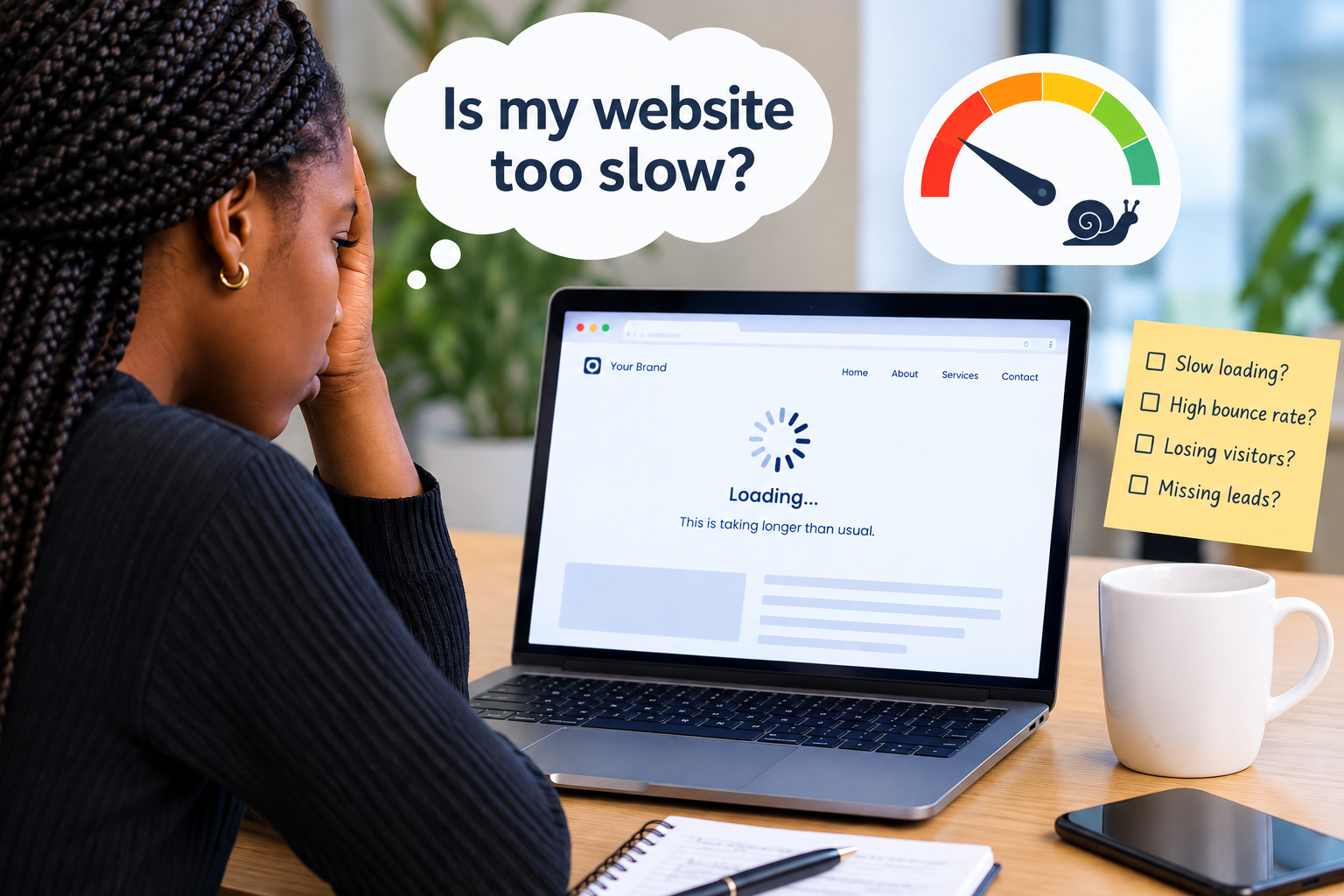
Page speed is important for both users and search performance.
Think about your own experience.
If you click a website and wait several seconds for the page to load, you may leave before reading anything.
Large images, unnecessary scripts, poor hosting configurations, and excessive third-party tools can all contribute to slow performance.
The solution isn't always to redesign the entire website. Sometimes improving image sizes, reducing unnecessary scripts, improving caching, or addressing hosting issues can make a meaningful difference.
7. Does my website work well on mobile?
A large portion of web searches happen on mobile devices, so your website needs to work properly on smaller screens.
Check whether:
Text is easy to read
Buttons are easy to tap
Images fit the screen
Navigation works properly
Forms are usable
Important content isn't hidden
Pages load reasonably quickly
A website that looks great on a desktop but is difficult to use on a phone can create a poor experience for potential customers.
8. Does my website have enough authority?
SEO isn't only about what's happening on your website.
Google can also use signals from other websites and online sources to understand the authority and reputation of a website.
Relevant backlinks can help strengthen a site's authority, particularly when they come from reputable and contextually relevant websites.
But getting hundreds of low-quality links isn't the answer.
A better approach is to build legitimate visibility through useful content, relevant partnerships, digital PR, industry mentions, business directories where appropriate, and other legitimate link-building methods.
Quality and relevance matter more than simply collecting links.
9. Is my website too new?
Sometimes the answer is simply: your website needs more time.
A new website doesn't necessarily start ranking competitively immediately.
Google needs to discover and understand your pages, while your website may also need to build content, relevance, authority, and user signals over time.
That doesn't mean you should sit back and wait.
Use the early period to make sure your technical SEO is sound, publish useful content, target relevant keywords, build your authority, and monitor Search Console data.
SEO is an ongoing process rather than a one-time website launch task.
10. Why am I ranking for some keywords but not getting customers?
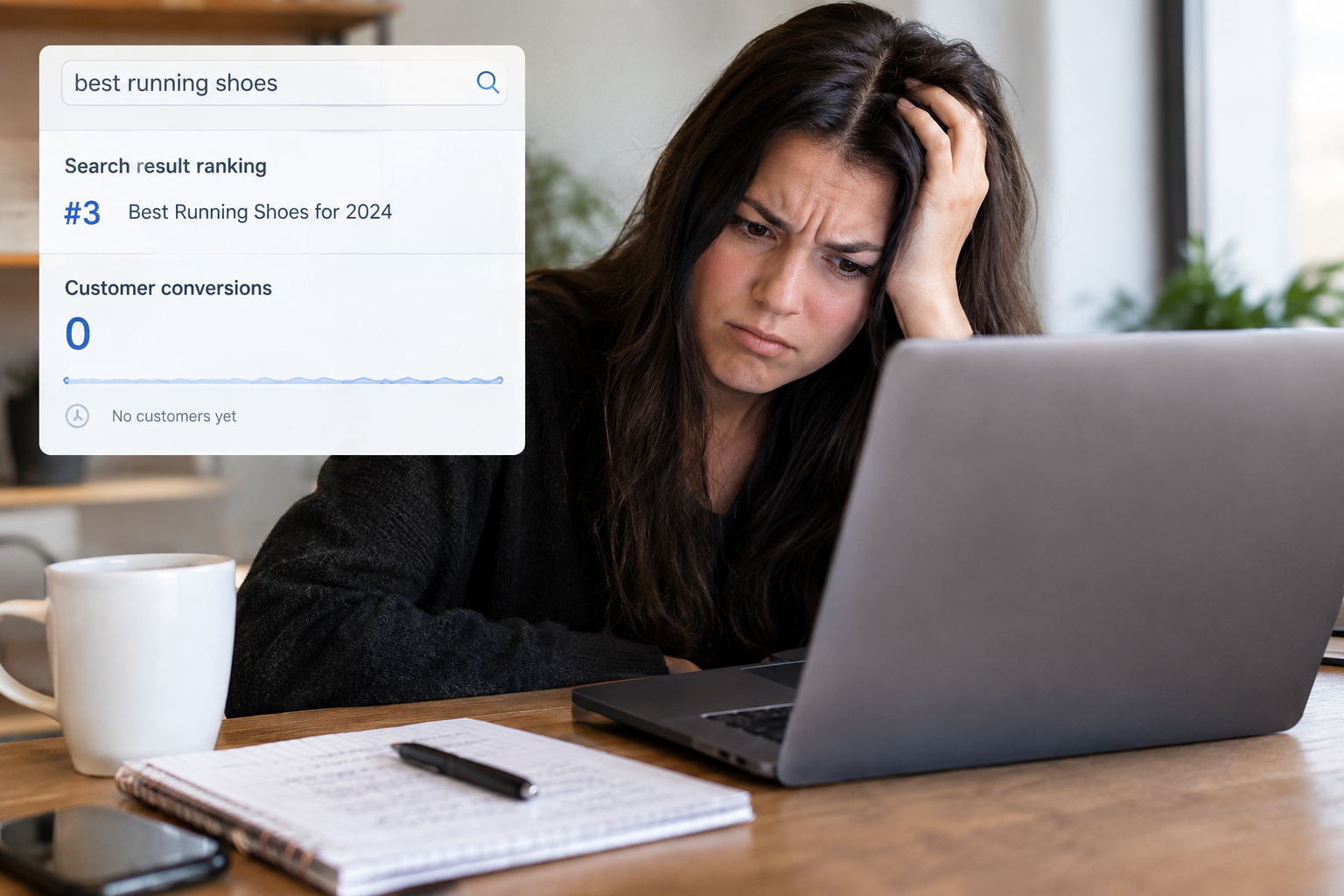
This is an important distinction.
Ranking is not the same as generating leads.
You could rank for keywords that receive traffic but have little connection to what you sell.
For example, an article might attract hundreds of visitors searching for general information but generate very few enquiries.
A better SEO strategy connects:
Search → Content → Service → Conversion
Someone finds your article.
They discover that you understand their problem.
They explore your relevant service.
They contact your business.
That's where SEO becomes more than a traffic-generation exercise.
So, What Should You Do If Your Website Isn't Ranking?
Don't immediately assume you need more blog posts.
Start with an SEO diagnosis.
Look at:
Indexing – Can Google find and index your important pages?
Keywords – Are you targeting searches relevant to your business?
Content – Does each page genuinely answer the searcher's question?
Technical SEO – Are there crawling, indexing, speed, or structural issues?
On-page SEO – Are your titles, headings, URLs, links, and content properly optimized?
Authority – Does your website have relevant external signals and backlinks?
User experience – Is the website easy to use on desktop and mobile?
Conversions – Does your traffic have a clear path to becoming a lead?
This is why an SEO audit can be more useful than randomly changing keywords or publishing more content.
How Hordanso Can Help
If your website isn't ranking on Google, Hordanso LTD can help identify what's holding it back and build a strategy around your actual business goals.
From technical SEO and on-page optimization to content strategy, local SEO, and digital marketing, the focus should be on making your website more visible to the people who are actually searching for what you offer.
Because the goal isn't simply to say, "We're ranking."
The bigger question is:
Are the right people finding your business?
If your website isn't getting the visibility or enquiries you expected, an SEO assessment can help you understand what needs attention and where to start.
Frequently Asked Questions
How long does it take for a website to rank on Google?
There is no fixed timeline. Results can depend on competition, website history, content quality, technical health, authority, keyword difficulty, and the SEO work being implemented.
Can a new website rank on Google?
Yes. A new website can rank, but competitive searches may require time and consistent SEO work to build relevance and authority.
Does adding more keywords improve rankings?
Not necessarily. Repeating keywords excessively can make content unnatural. It's generally better to create useful content that clearly addresses the searcher's intent and uses relevant terminology naturally.
Should I redesign my website if it isn't ranking?
Not always. A redesign may help if the existing website has serious usability, technical, structural, or conversion problems. But if the underlying issue is content, keyword targeting, indexing, or authority, redesigning alone may not solve the problem.
Can SEO guarantee first-page rankings?
No legitimate SEO strategy can guarantee a specific Google ranking. Search results can change based on competition, search intent, algorithm changes, location, and many other factors.
How can I find out why my website isn't ranking?
Start with Google Search Console and a technical/content SEO audit. These can reveal indexing issues, search queries, performance patterns, and areas that may need improvement.
At Hordanso LTD, we help businesses improve their search visibility through practical SEO strategies covering technical optimization, on-page SEO, content, local search, and other areas that can support sustainable organic growth.
If you're unsure whether your biggest SEO problem is technical, on-page, or off-page, an SEO audit can help you find out where to focus first.
Ready to improve your website's visibility and attract more qualified customers?Talk to Hordansoabout your SEO goals.


